Many people who plan to donate plasma for the first time often ask the same question: does donating plasma hurt? The idea of needles and medical procedures can make some individuals nervous, especially if they have never donated blood or plasma before. Fortunately, most donors describe the process as only mildly uncomfortable rather than painful. While there can be a slight pinch when the needle is inserted, the overall experience is usually manageable and safe for healthy individuals.
Plasma donation is an important medical process that helps create life-saving treatments for patients with immune disorders, burns, blood clotting conditions, and other serious health issues. Because plasma cannot be manufactured artificially, donations from healthy people are essential. Therefore, understanding what happens during plasma donation can help reduce anxiety and make the process feel less intimidating.
The plasma donation process begins with registration, a health screening, and a quick physical check. During medical evaluations, healthcare professionals may perform parts of a head to toe assessment to review a person’s general condition. Once approved, the donor sits in a reclining chair while a sterile needle is inserted into a vein, usually in the arm. Blood is then drawn into a machine that separates the plasma before returning the remaining blood components back into the body. Most donations take between one and two hours, depending on the donor and the equipment used.
Effects on the Body
One of the most common concerns people have is does donating plasma hurt your body. In general, plasma donation is considered safe when done at licensed donation centers that follow medical guidelines. The body naturally replaces plasma quickly, often within 24 to 48 hours, which is why many healthy individuals can donate regularly.
Some donors experience temporary side effects after donating plasma. For example, mild fatigue, dizziness, thirst, or bruising near the needle site are among the most common reactions. These symptoms are usually short-term and improve after resting, drinking fluids, and eating a healthy meal. In addition, staying hydrated before and after donation can significantly reduce discomfort and recovery time. People looking for another refreshing hydration option may also explore the benefits of cucumber water.
However, most healthy people return to normal activities within the same day. Medical professionals also monitor donors closely during the process to ensure safety and comfort.
It is important for donors to follow instructions carefully before donating plasma. Eating nutritious foods, getting enough sleep, and drinking plenty of water can improve the overall experience. Additionally, individuals with certain health conditions may not qualify to donate, which is why medical screenings are required before each session.
Although some people worry that frequent plasma donation could weaken the body, regulated donation schedules are designed to protect donor health. Donation centers follow strict safety standards to ensure the process remains safe and effective for both donors and patients who rely on plasma-based treatments. Furthermore, people reviewing their iron-related laboratory results can learn what a TIBC blood test high result may indicate.
Does It Hurt Donating Plasma?
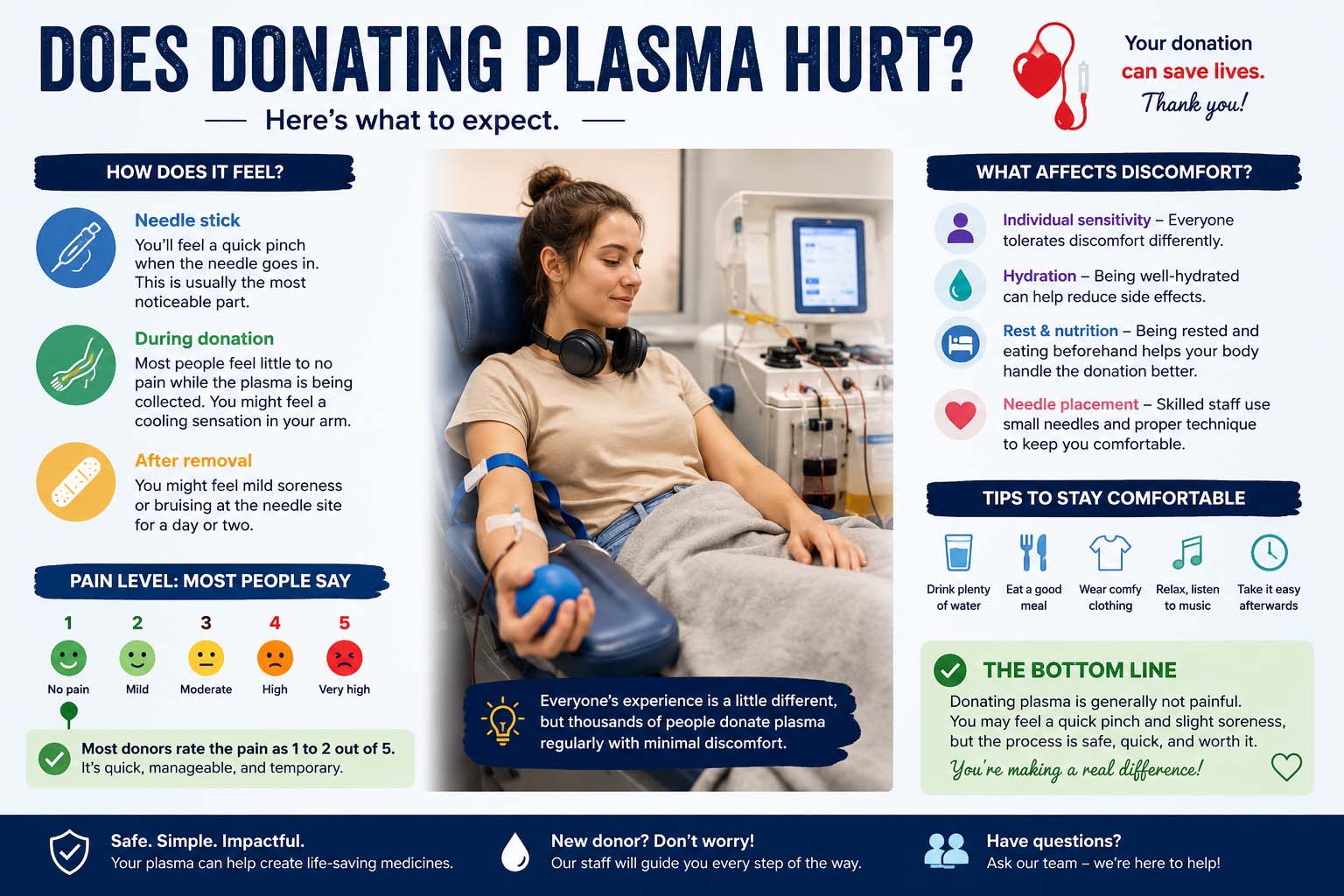
Another frequently asked question is does it hurt donating plasma compared to other medical procedures. Most donors report that the only noticeable discomfort occurs when the needle enters the vein. This feeling is often compared to a quick pinch or small sting that lasts only a few seconds.
Once the needle is in place, many donors feel little to no pain during the rest of the session. However, some individuals may notice a cool sensation in the arm when blood components are returned to the body by the plasmapheresis machine.
People who are anxious about needles may feel more nervous before the procedure begins. Therefore, relaxing, staying calm, and speaking with the medical staff can make the process easier. Experienced technicians work carefully to minimize discomfort and ensure the donor feels comfortable throughout the donation.
How Bad Does Donating Plasma Hurt?
When asking how bad does donating plasma hurt, the answer depends largely on individual sensitivity and personal experience. For the majority of donors, the discomfort is mild and temporary rather than severe. The initial needle insertion may create a brief sharp sensation, but this quickly fades once the procedure begins.
Some people may experience minor soreness or bruising around the needle area afterward. This usually disappears within a few days and can often be reduced by applying pressure after the donation and avoiding heavy lifting with the affected arm.
Occasionally, donors may feel lightheaded or slightly weak during or after the process. These reactions are more likely if the donor skipped meals, did not drink enough water, or felt anxious before donating.
Comparing Plasma and Blood Donation
A common comparison among first-time donors is does donating plasma hurt more than blood. The answer varies depending on the individual, but many donors say the discomfort level is similar to or only slightly different from donating blood.
The biggest difference is the length of the procedure. Plasma donation generally takes longer because the blood is separated and returned to the body through a machine. In contrast, blood donation is usually quicker because the blood is collected directly without separation.
Some people feel plasma donation is easier because red blood cells are returned to the body, which may reduce feelings of weakness afterward. Others find the repeated flow of blood through the machine slightly uncomfortable, especially during their first session. However, neither process is typically described as severely painful.
Conclusion
So, does donating plasma hurt? For most people, the answer is no more than mild temporary discomfort. The process may involve a quick pinch from the needle and some slight soreness afterward, but serious pain is uncommon. Ultimately, understanding what happens during plasma donation can help reduce fear and make first-time donors feel more prepared.